

Which Sustainability Reporting Regulations Apply to Your Company?
Sustainability & ESG, News / September 22, 2026
By Paul Gassett, Chief Executive Officer
Sustainability reporting requirements continue to evolve, but determining which ones may apply to your organization is not always straightforward.
Different regulations use different criteria to define which companies fall within their scope. Where your organization operates, its size, structure and industry can all affect which requirements deserve attention.
For sustainability, legal and corporate communications teams, the first challenge is often not interpreting every regulation in detail. It is answering a more fundamental question:
Which sustainability reporting regulations should our company be paying attention to?
That is where a focused screening process can help.
Why Sustainability Reporting Requirements Vary by Company
There is no single set of sustainability reporting regulations that applies uniformly to every organization.
A company may face reporting requirements in one jurisdiction but not another. Requirements may also change as an organization grows, enters new markets or crosses specific regulatory thresholds.
While individual regulations can be complex, three questions provide a useful starting point.
Where do you operate?
Sustainability regulations are often tied to jurisdiction.
Depending on the regulation, factors such as where a company is headquartered, conducts business or maintains operations may affect whether a requirement warrants closer review.
For organizations operating across multiple states or countries, understanding the regulatory landscape can become complicated quickly.
How large is your company?
Many sustainability reporting requirements establish thresholds based on measures such as revenue, employee count or other organizational characteristics.
As companies grow, requirements that previously did not apply may become relevant. That makes company size an important part of an initial regulatory assessment.
What industry are you in?
Industry can also influence the sustainability risks, disclosure requirements and reporting expectations an organization faces.
Companies in energy, manufacturing, financial services, technology and other sectors may encounter very different environmental, climate and sustainability issues.
Together, jurisdiction, company size and industry can help narrow a broad regulatory landscape into a more manageable starting point.
Start by Narrowing the Regulatory Landscape
Trying to understand every sustainability law and reporting requirement across every market is rarely the most efficient place to begin.
A better first step is identifying the regulations that may be relevant to your organization.
This type of preliminary screening can help teams focus their research and determine where a deeper review may be needed.
It can also help organizations begin addressing practical questions such as:
- Which sustainability reporting requirements warrant our attention?
- Are there regulations we should investigate now?
- Could upcoming requirements affect the information we need to collect?
- Are there issues we should discuss with legal counsel or other specialists?
- Could new requirements affect our reporting process, data systems or internal responsibilities?
Meet REGIE™: OBATA‘s Sustainability Regulations Assessment Tool
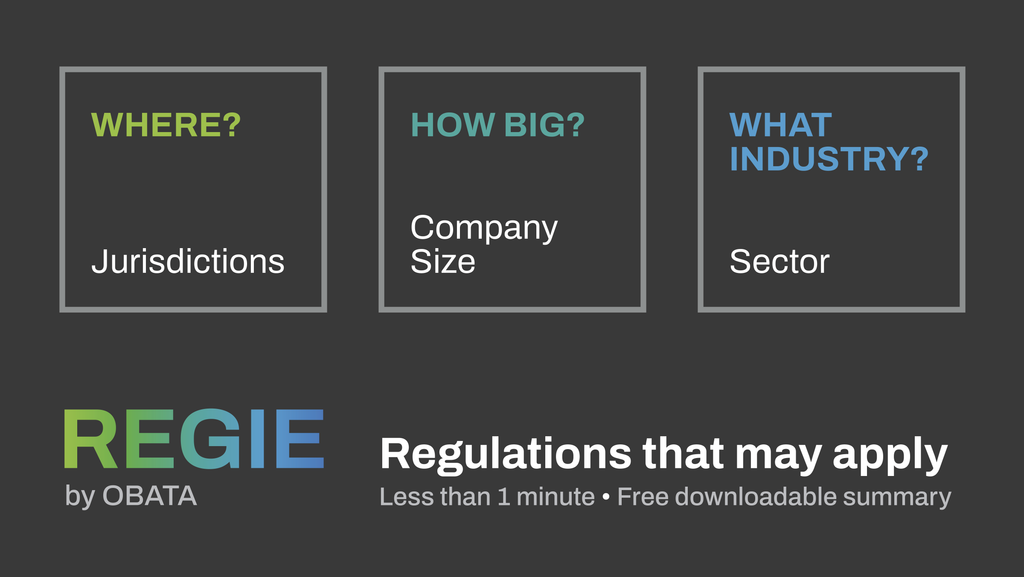
REGIE™ is a free sustainability regulations assessment tool from OBATA that helps organizations identify reporting laws and regulations that may apply based on jurisdiction, company size and industry.
The process begins with three basic questions:
Where?
Select the jurisdictions relevant to your organization.
How big?
Provide basic information about your company size.
What industry?
Identify your primary industry or sector.
REGIE uses those inputs to narrow the regulatory landscape and identify requirements that may warrant further investigation.
The assessment takes less than one minute, evaluates your organization against 20+ sustainability laws and regulations, and generates a free personalized assessment report summarizing the regulations that may apply to your organization.
Not sure which sustainability regulations may apply?
Use REGIE to quickly narrow the field and identify requirements that may deserve a closer look.
What REGIE Provides
REGIE is designed to make the first stage of regulatory research more manageable.
Based on the information you provide, the assessment helps:
- Identify sustainability laws and regulations that may be relevant to your organization
- Narrow a complex regulatory landscape
- Highlight requirements that may warrant additional research
- Provide a personalized summary for further review
The objective is not to replace detailed regulatory analysis. It is to give organizations a practical place to start.
What REGIE Is — and What It Isn’t
REGIE is an informational screening tool, not a legal compliance determination.
Individual regulations can contain detailed definitions, thresholds, exemptions, implementation schedules and other provisions that influence whether a specific organization is ultimately subject to them.
Requirements can also change.
A REGIE result indicating that a regulation may apply should therefore be treated as a reason for further investigation, not as a final determination of legal obligations or compliance.
Organizations should confirm applicable legal requirements with qualified counsel before making compliance decisions.
Once You Know What May Apply, What Comes Next?
Identifying potentially relevant sustainability regulations is only the beginning.
The next challenge is determining what those requirements could mean for your organization:
- What information will need to be collected?
- Is the necessary data available and reliable?
- Which departments and business functions need to be involved?
- Are reporting responsibilities clearly defined?
- Do existing sustainability disclosures address emerging requirements?
- What processes may need to change?
For organizations beginning or strengthening a reporting program, OBATA’s 7-Step ESG Reporting Process provides a practical overview of the reporting process.
OBATA’s Sustainability Consulting & Advisory practice also helps organizations evaluate reporting readiness, disclosure requirements, frameworks and sustainability strategy.
Our Sustainability & ESG Reporting team helps organizations translate sustainability strategy, data and disclosure requirements into clear, credible reporting and communications.
Frequently Asked Questions
How do I know which sustainability reporting regulations apply to my company?
Start by considering where your organization operates, its size and its industry. These factors can help narrow the regulations that may warrant further review. The specific scope and applicability of individual regulations should then be confirmed against their requirements.
Do sustainability reporting regulations apply to private companies?
They can. Some sustainability reporting requirements use criteria such as company size, revenue, location or business activity rather than public-company status alone. Private companies should not assume they are outside the scope of sustainability regulation without reviewing the applicable requirements.
Is REGIE a compliance assessment?
No. REGIE is an informational screening tool designed to help identify sustainability regulations that may warrant further investigation. It does not provide legal advice or determine an organization’s regulatory obligations.
Get a Clearer View of Your Sustainability Regulatory Landscape
You don’t need to research every sustainability regulation to determine where to begin.
REGIE can help narrow the field.
In less than one minute, you can identify sustainability reporting regulations that may deserve your organization’s attention and receive a free downloadable summary of your results.